Architecture remembers differently
Another Footnote for … Skövde
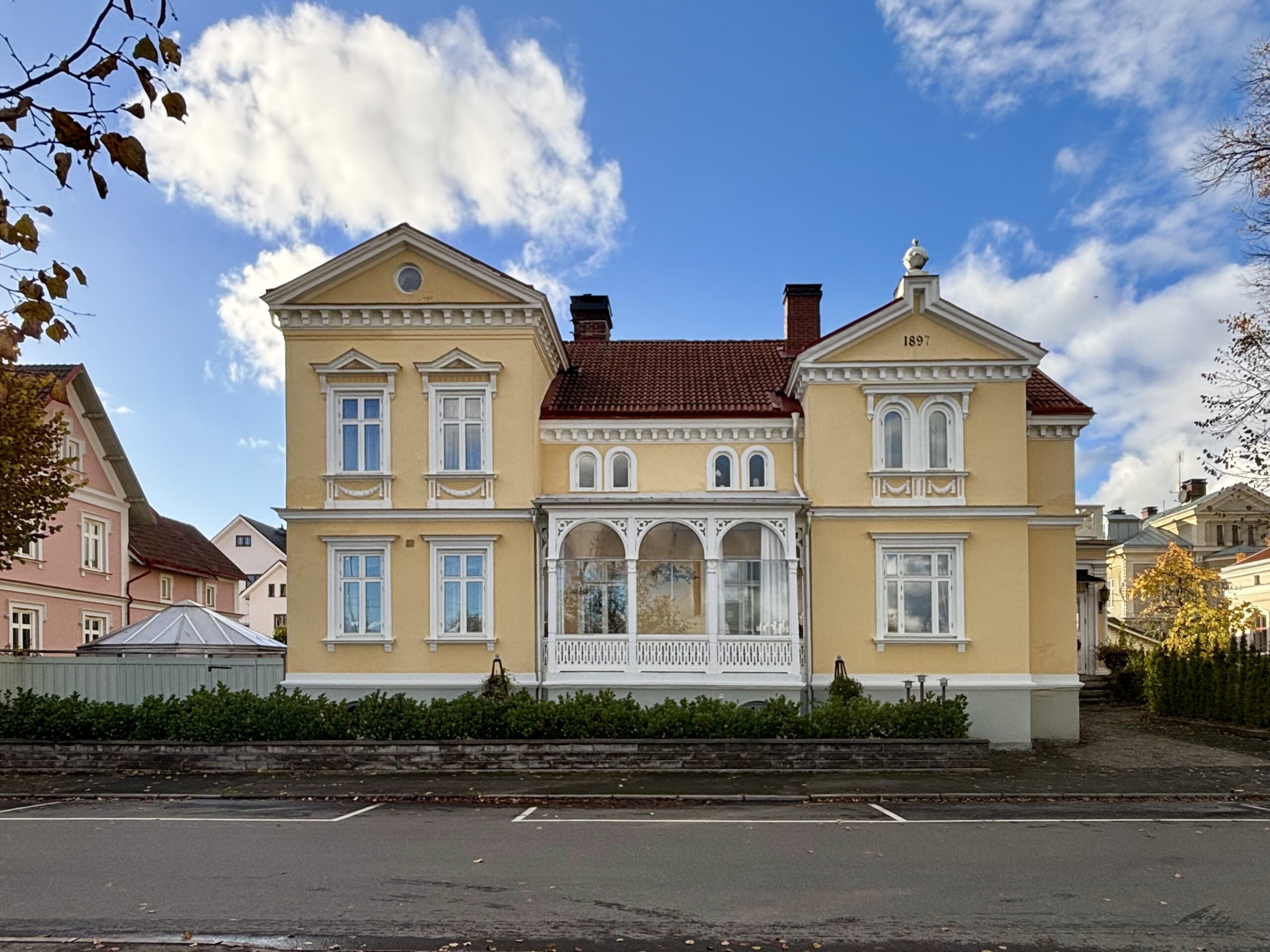
Walking through Skövde, I began to photograph a particular kind of house, residential buildings, especially family homes.


They were built mostly during the first three decades of the twentieth century, when industrialisation was transforming the town. These were not workers’ houses, but homes of a newly established industrial class: I suppose directors, entrepreneurs and others whose lives were closely connected to the industries and probably the military regiments that were reshaping Skövde.
What interests me is not simply their architectural style. A house is also a statement about how someone positions themselves in the world. Its entrance, the roof, the windows, the boundary between public and private — all these elements produce an image of how one wishes to live and, perhaps, how one wishes to be seen.


Walking makes these relationships visible. Seen one after another, the houses begin to form a kind of urban archive. They tell us about an emerging bourgeois culture, about prosperity and representation, but also about ideas of privacy, permanence and belonging.
Today, the people who built them are gone. Industries have changed, families have changed, the city has grown around them. Yet the houses remain.
And for me this is another form of cultural memory: not something deliberately preserved in an archive, but something embedded in streets, façades and everyday routes. And it is my reading of Skövde’s history, driven by my personal experience of urban development and its impact on built environment. Maybe I’m not that precise. I didn’t talk to the actual owners of the residential buildings. I only heard some stories about the town’s history. But:
Architecture remembers differently. It does not tell us what happened. It simply remains there — waiting for us to walk past and look again. Prints of time.


HELA HAVET STORMAR | Prints of time | Artist residency @konstmuseet Skövde
© Text and Photographs: Harald Etzemüller