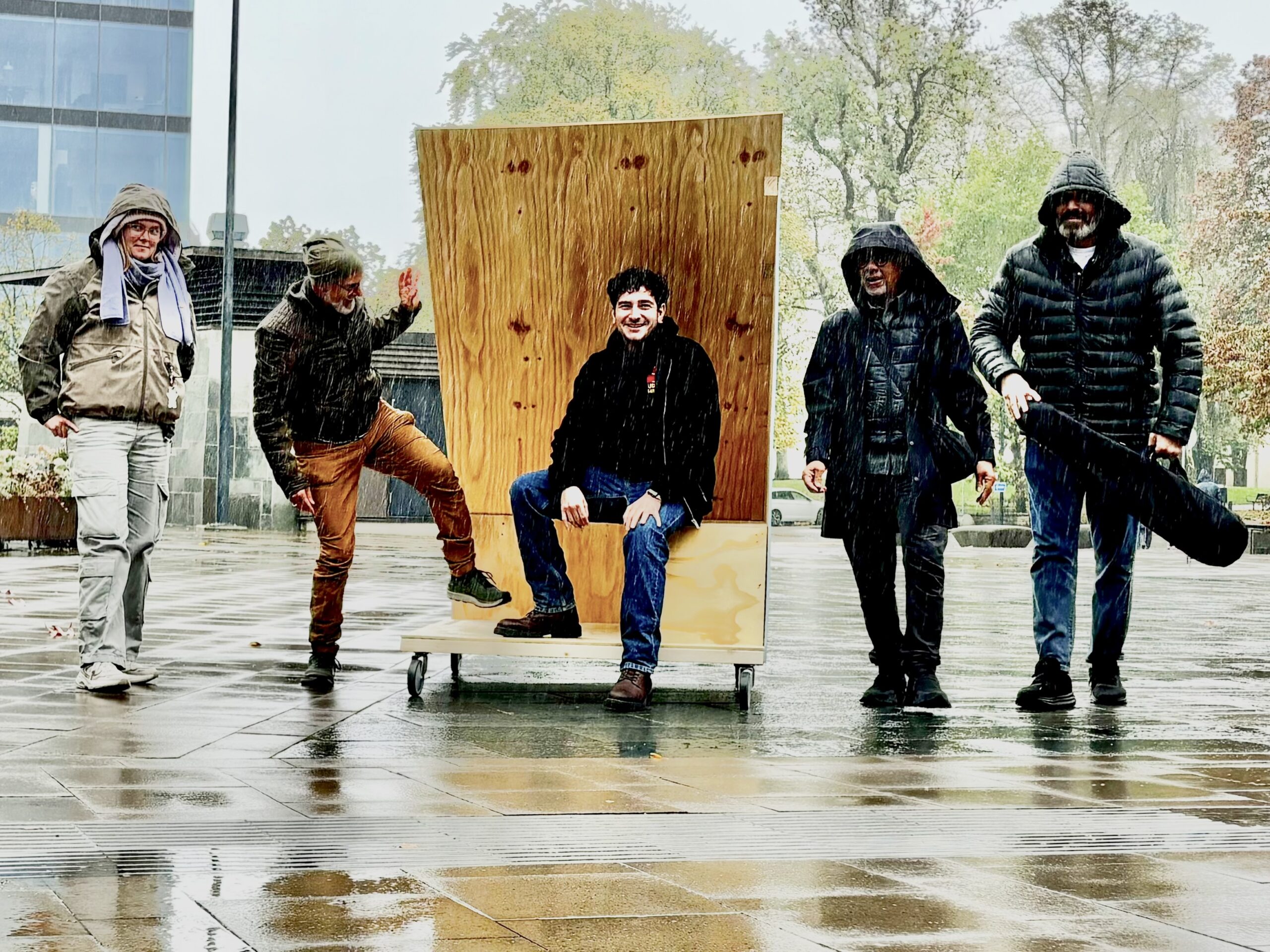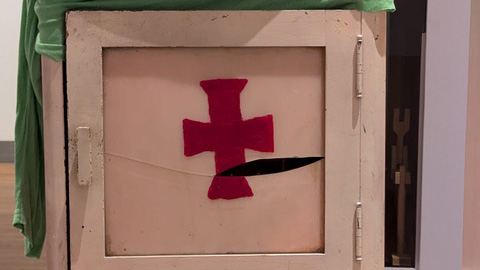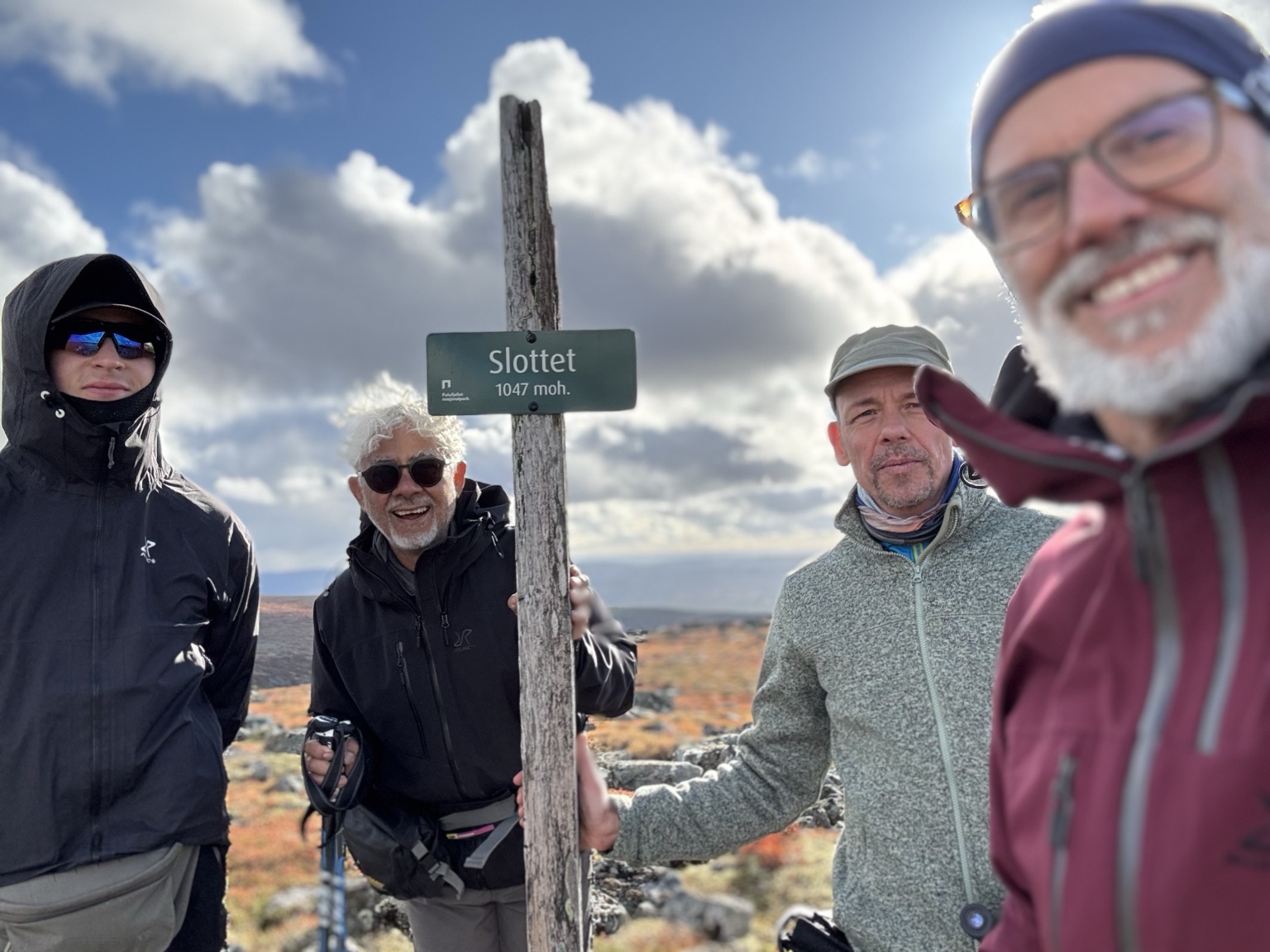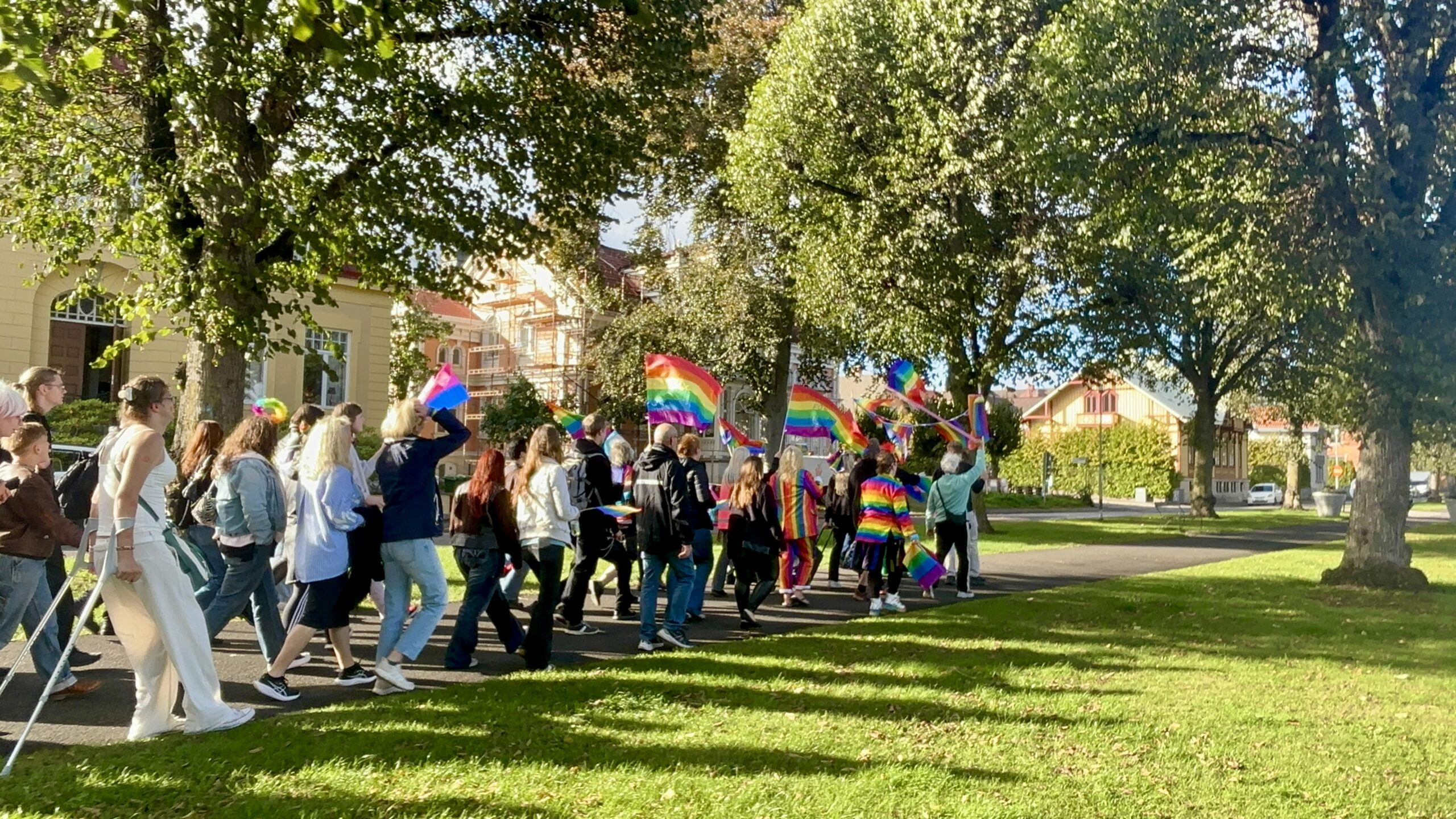
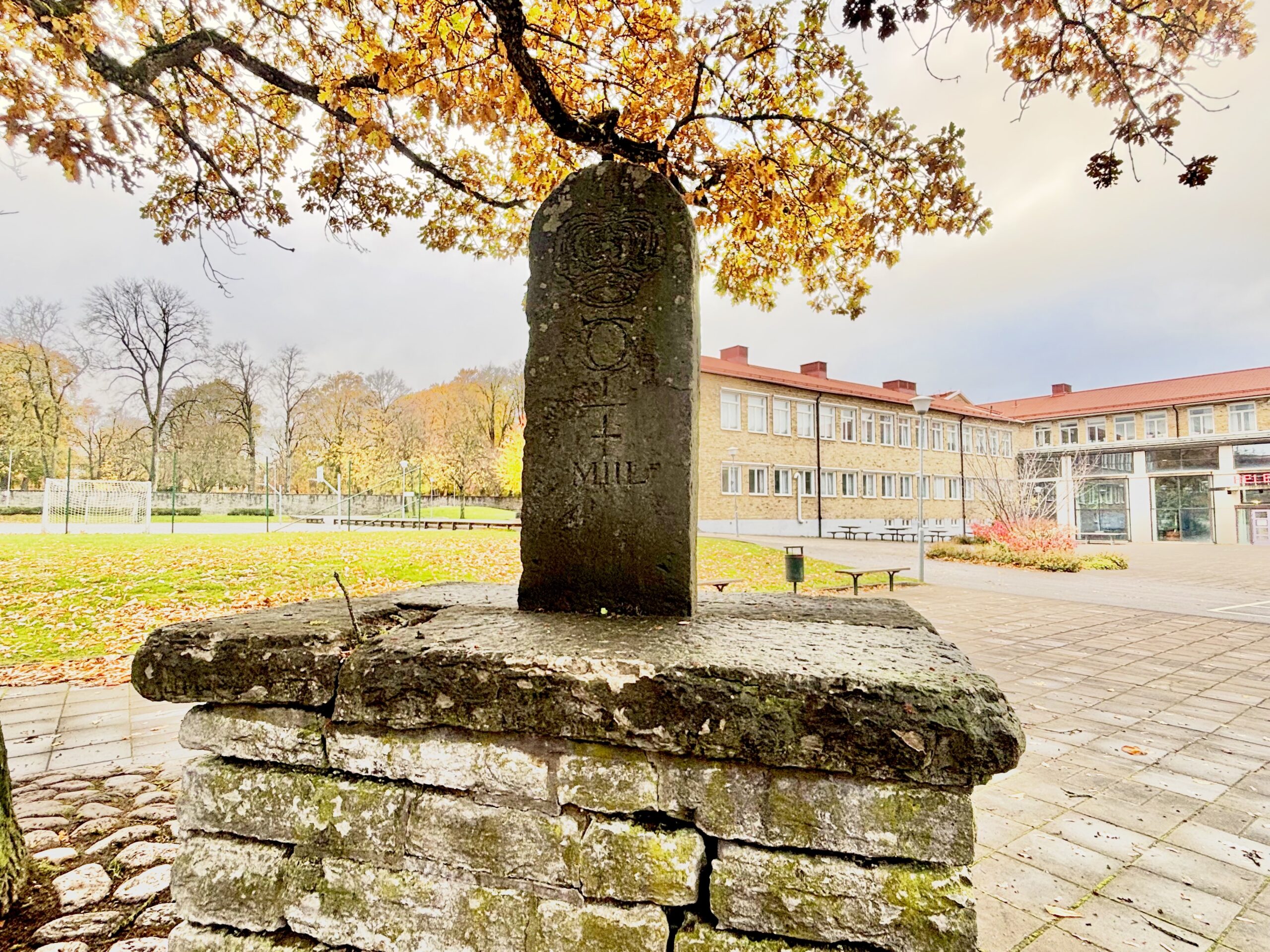
We set out to look for special places in the city. It was meant to be an invitation to experience walking as practice of observation, revealing overlooked details and unexpected encounters in the townscape. But perhaps places only become special when someone begins to tell a story about them… Walking through Skövde with Clara and Lina and with Andrea and Vládmir, the town gradually began to change. The streets told stories. Buildings became biographies. Things I had previously walked past suddenly demanded my attention.
Shortly after we started walking, we stumbled across this milestone, which — as subsequent research revealed — appears at first glance to be an abstract circular relief, but in fact depicts the royal monogram C (for Carl) XII. The stone forms part of the history of Sweden’s infrastructure: in 1649, a nationwide regulation had been introduced governing the positioning of milestones along state roads.


I had prepared a route through different layers of Skövde: from the Kulturhus and the ideas of post-war modernism to the separation of cars, bicycles and pedestrians; from the open green spaces between housing estates to the early twentieth-century art nouveau villas built as the military and industrial town expanded. Architecture and urban planning became a way of asking how ideas about society materialise in streets, buildings and landscapes. But Clara and Lina continually shifted this reading…
Clara grew up in northern Sweden. She spoke about snow as something once completely ordinary: skis, sledges, reindeer, winter as an everyday condition. Only after moving south did she discover that the childhood she had considered normal was, in fact, very particular. Perhaps we understand a place differently once we leave it.


As we walked through the residential areas, I pointed out something that had fascinated me since arriving in Sweden: the openness of the plots, the absence of fences and hedges that so often mark private territory elsewhere. For Clara this was hardly remarkable at first: “You could walk through someone’s garden – but you don’t.” The boundary exists without needing to become a wall. Architecture ends, social convention takes over. She spoke about the northern light, too. About how lamps and pictures can sit lower in Swedish homes because the sun itself remains low. A tiny observation – and suddenly latitude enters the living room.
Lina, originally from Gothenburg, listened to the city differently. She spoke about the trains near the university campus: not only hearing them, but sometimes feeling their vibrations through the ground. I had been speaking about railway lines, roads and the successive rings created to move traffic around the city. Lina turned infrastructure back into bodily experience. The city is not only what we see or plan. It’s not only the visual perception that the British architect and urbanist Gordon Cullen learned us to be attentive to. We also hear it, and we can feel it beneath our feet.
Further uphill, we looked at housing from different decades: buildings positioned in relation to slope, sun and view; repetitive structures that nevertheless create small individual territories; storage boxes beside entrances; a chimney that made us speculate about whether there might once have been a common heating system, or is it still existing? We did not know. And that became part of the walk too: looking closely enough to formulate hypotheses without needing every observation immediately to become a fact.


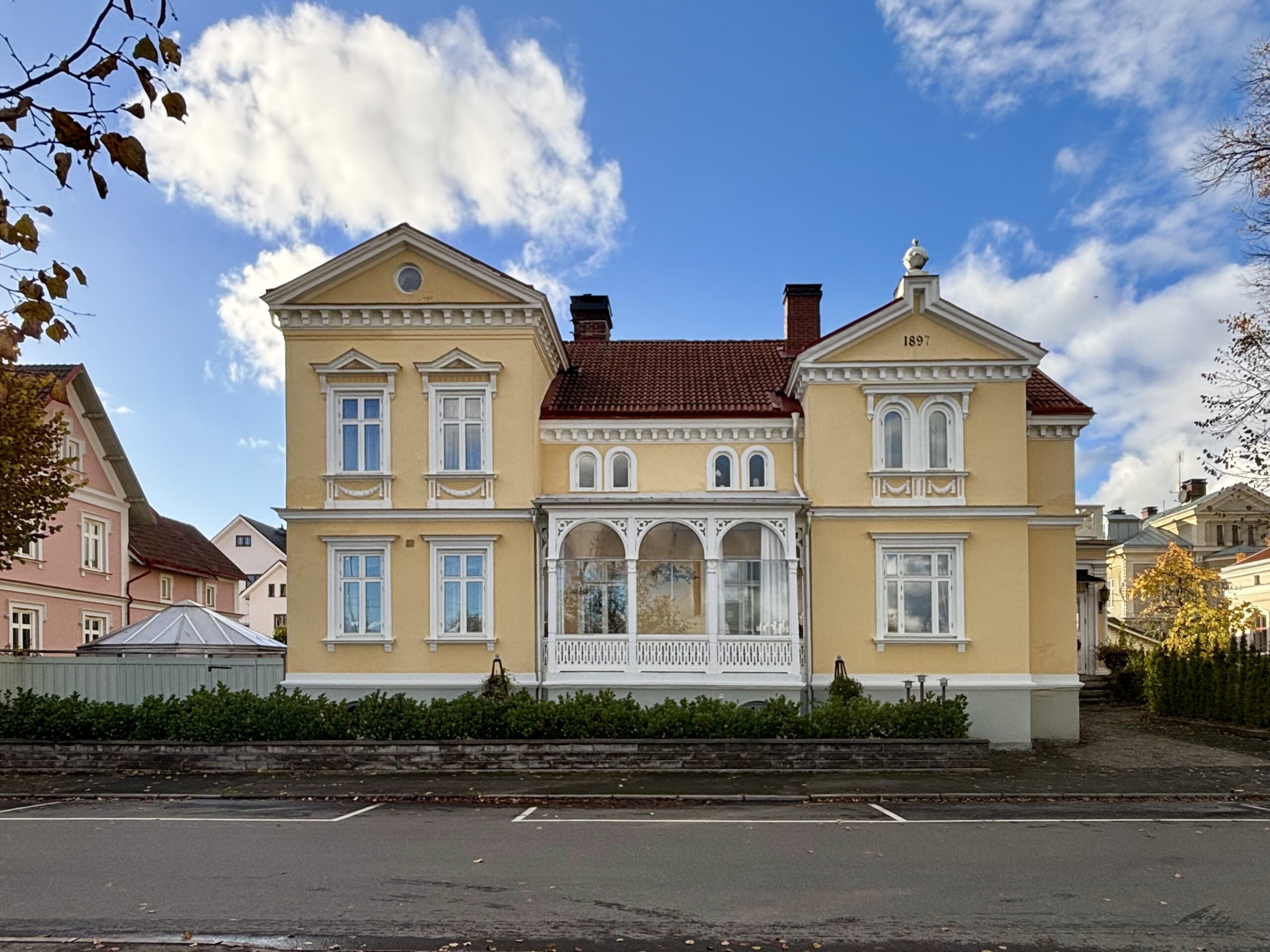
Then we reached the older streets. I spoke about the expansion of Skövde at the beginning of the twentieth century, about the urban plan from 1903, about the villas, representation and the different architectural languages brought into a growing industrial and military town.
And suddenly Lina stopped. Her mother had grown up here, in one of the apartment buildings in an avenue-style large street. Her grandfather had moved to Skövde for work. Her grandmother had taught gymnastics nearby. Lina looked up at one of the houses and pointed towards the second floor. “Her room was up there.” One window among many. A building that a moment before had belonged to my architectural reading of the city had become something entirely different: someone’s childhood.
We continued. Paying attention to detail. A façade hiding another façade. Old windows that might have survived for a century. A house turning towards the sun. The vibration of a passing train. None of this existed in my route in quite this form. We continued. Paying attention to representation. Or silly little things like that new door, eventually prepared as entrance to the best Halloween party at the end of next week?


I had brought buildings, dates, urban structures and my way of reading architecture. Clara and Lina brought childhood, family history and observations that I could never have prepared. And this may be what walking as an artistic practice can do. Me as guide proposed a direction. Architecture leaves traces. The city provides the material. Memory interrupts the planned narrative. And everyone walking adds another layer. Somewhere between architecture and biography, between what was planned and what was remembered, another Skövde appeared, and this is not the city on the map. It is a city that temporarily was made between us.
One more footnote for … Skövde — with temporary, collective authorship.


HELA HAVET STORMAR | Prints of time | Artist residency @konstmuseet Skövde
© Text and Photos by Harald Etzemüller, except 5, 7, 10 by Vládmir Combre de Sena
#helahavetstormar #skovde #collectiveauthorship #familystories #peculiarities